
Top 5 Dendy Games: A Guide to 8-Bit Classics
Table of Contents
The 8-Bit Architecture and Cultural Odyssey of Dendy
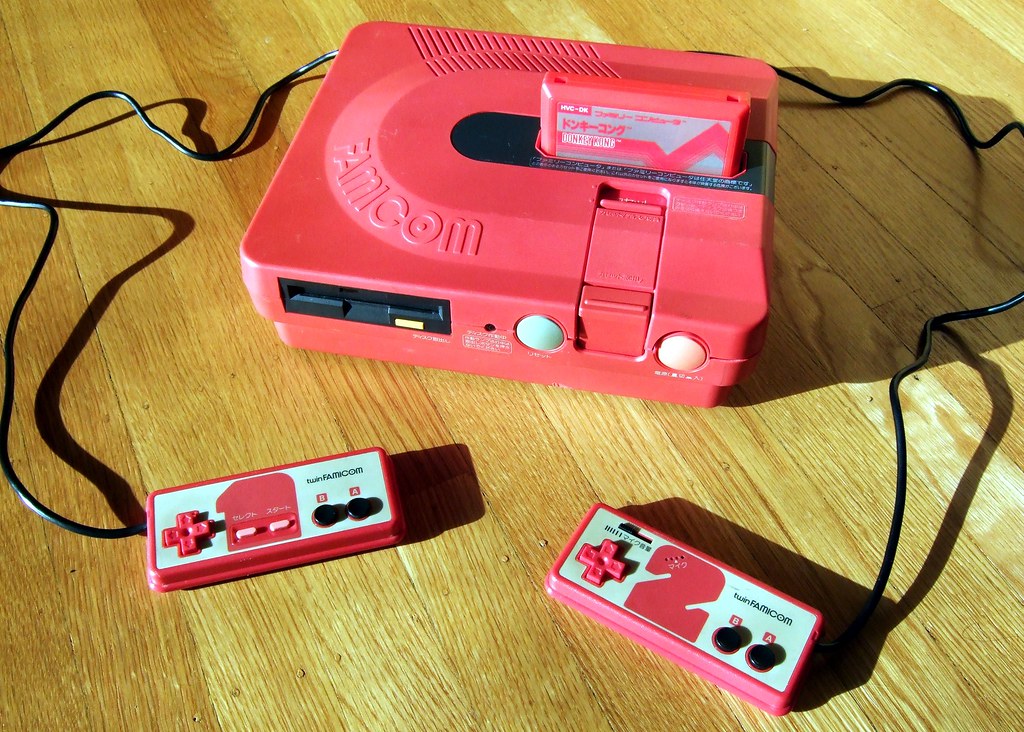
In the early 1990s across Eastern Europe and the post-Soviet sphere, official consumer electronics distribution networks from Nintendo did not exist. Into this hardware vacuum stepped Steepler, releasing the Dendy—a hardware clone of Nintendo's Family Computer (Famicom). Engineered with custom integrated circuits, primarily the United Microelectronics Corporation (UMC) UA6527 processor and UA6538 picture processing unit, the Dendy re-implemented Nintendo's 8-bit architecture with remarkable fidelity while adjusting timing loops for 50Hz PAL television broadcast standards.
Unlike the American NES with its front-loading cartridge bay, Dendy adopted the top-loading 60-pin cartridge format of the Japanese Famicom. This allowed consumers to experience an eclectic global gaming library. Players plugged yellow plastic cartridges into top-mounted sockets, connecting to cathode-ray tube televisions via RF modulators and composite RCA leads. Multi-carts famously promised thousands of titles, combining arcade masterpieces with homebrew software.
Beyond the cultural novelty of hardware cloning, the Dendy era represented software engineering under extreme hardware austerity. Developers worked within a strict 2-kilobyte work RAM envelope, supplemented by memory-mapper cartridges that bank-switched read-only memory on the fly. The five canonical titles analyzed below represent the pinnacle of 8-bit game design: projects that extracted spatial complexity, kinematic fluidity, and acoustic dynamism from silicon running at 1.79 megahertz.
1. Super Mario Bros. (1985)
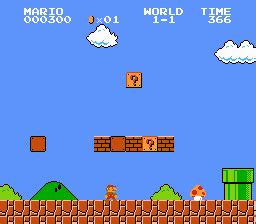
Shigeru Miyamoto and Takashi Tezuka's Super Mario Bros. established the foundational grammar of two-dimensional platforming. Prior to its release, single-screen arcade games dominated the market, with fixed-boundary playfields and static environmental parameters. Super Mario Bros. radically restructured interactive space into a dynamically scrolling, multi-biome odyssey that guided the player across thirty-two stages of increasing architectural sophistication.
- Primary Objective: Traverse eight sprawling worlds, overcome Bowser's defensive fortresses, and rescue Princess Toadstool from the Koopa subjugation.
- Core Protagonists & Adversaries: Mario, Luigi (in alternating hot-seat two-player campaigns), Toad retainers, Goombas, Koopa Troopas, Lakitu, and King Bowser.
- Mechanical Architecture & Spatial Design: Engineered within an astonishing 40-kilobyte ROM footprint, the game relies on procedural level encoding routines and sub-pixel momentum calculations. Mario's physical momentum features acceleration and deceleration curves: jumping while sprinting imparts horizontal velocity that alters trajectory arcs and landing recoveries.
The opening layout of World 1-1 serves as a masterclass in non-verbal pedagogical design. A solitary Goomba approaches from the right, while flashing question-mark blocks hang overhead. If the player attempts to walk forward, collision occurs, teaching the jump input immediately. Hitting the block reveals the Super Mushroom, which cannot be easily avoided due to the bounding pipe, demonstrating that power-ups enhance player survivability.
2. Contra (1987 arcade; 1988 Famicom/NES)
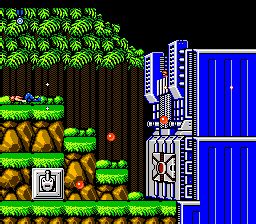
While Konami originally engineered Contra as a dual-CPU arcade cabinet in 1987, the home console adaptation directed by Koji Hiroshita remains the definitive historical touchstone for cooperative run-and-gun action. The conversion was far from a compromised downgrade; Konami re-architected the game's pacing, extended its level layouts, refined its eight-directional ballistic firing vectors, and introduced the legendary thirty-life debug code that became immortalized worldwide.
- Primary Objective: Infiltrate the Galuga archipelago, neutralize the Red Falcon terrorist insurgency, and eradicate an encroaching extraterrestrial biome.
- Core Protagonists & Adversaries: Earth Federation commandos Bill Rizer and Lance Bean facing armored gun emplacements, mechanical walker fortresses, and the alien mastermind Red Falcon.
- Mechanical Architecture & Spatial Design: Contra seamlessly interweaves horizontal side-scrolling stages, vertical platform ascent shafts, and pseudo-3D base infiltration corridors. Players maneuver across treacherous jungle canopies, collapsing bridges, and mechanized snowfields, collecting weapon pods that transform rudimentary rifle fire into Spread guns, Lasers, and automated Fireball spirals.
The technical triumph of Contra on Famicom hardware lies in its handling of simultaneous two-player cooperative states. With dozens of enemy sprites, cascading projectiles, and explosive particle effects populating the scanline, developers cycled sprite rendering priorities across alternating frames to prevent the hardware's 8-sprites-per-scanline threshold from crashing the PPU.
3. Battle City (1985)
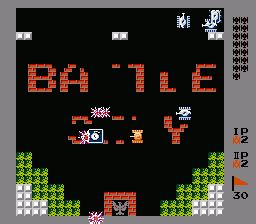
Developed and published by Namco in 1985 as an evolution of their earlier arcade title Tank Battalion, Battle City stands as a quintessential masterpiece of tactical defense and cooperative arena survival. In the post-Soviet Dendy ecosystem, Battle City achieved iconic cultural ubiquity, occupying a place in virtually every multicart library and serving as a staple of household gaming.
- Primary Objective: Annihilate twenty enemy tanks arriving in sequential waves across thirty-five combat grids while defending the base's golden eagle emblem from destructive fire.
- Core Protagonists & Adversaries: One or two player-commanded light tanks pitted against four distinct enemy vehicle classes: agile scout tanks, fast reconnaissance units, rapid-fire assault vehicles, and heavily armored battle tanks requiring multiple armor-piercing rounds.
- Mechanical Architecture & Spatial Design: The game's 13x13 grid playfield features destructible brick barriers, impenetrable steel plate walls, camouflage forest canopies, ice terrain that induces inertia slippage, and water trenches impassable by ground treads. Collecting star emblems systematically upgrades the player tank from a basic chassis into a rapid-fire dual-barrel armored unit capable of obliterating steel fortifications.
Battle City's genius stems from its ruthless spatial economy and emergent tactical tension. Enemy armor does not merely target player units; certain classes calculate direct trajectory paths toward the central eagle emblem, forcing players to abandon offensive hunting in favor of desperate defensive retreats.
4. DuckTales (1989)
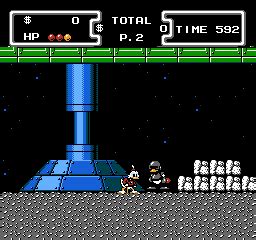
Produced during the golden age of Capcom's licensed Disney productions, DuckTales exemplifies how visionary mechanics and non-linear level design can elevate licensed intellectual property into high gaming art. Directed by Key Akiyama with character mechanics conceptualized by veteran Mega Man developers, DuckTales rejected linear stage progression in favor of an exploratory globe-trotting expedition that rewarded inquisitive navigational curiosity.
- Primary Objective: Journey across five hazardous international and cosmic territories to uncover legendary treasures and secure Scrooge McDuck's standing as the world's wealthiest individual.
- Core Protagonists & Adversaries: Scrooge McDuck, supported by Huey, Dewey, Louie, Webby, and Launchpad McQuack, competing against Magica De Spell, the Beagle Boys, and Flintheart Glomgold.
- Mechanical Architecture & Spatial Design: Rather than enforcing a rigid corridor, DuckTales features a hub computer terminal permitting players to tackle the Amazon, Transylvania, African Mines, The Himalayas, and The Moon in any desired sequence. Stage architecture incorporates expansive vertical shafts, hidden breakable wall cavities, and secret treasure chambers filled with diamonds and invulnerability items.
The defining mechanical innovation of DuckTales is Scrooge McDuck's cane pogo-hop. By pressing downward and the jump button simultaneously, Scrooge deploys his walking stick as an omni-directional pogo spring, allowing him to bounce continuously across spiky surfaces, dispatch adversaries from vertical perches, and vault into upper architectural lofts.
5. Chip ’n Dale Rescue Rangers (1990)
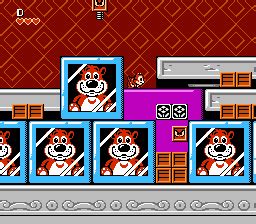
Continuing Capcom's peerless run of 8-bit platforming triumphs, Chip ’n Dale Rescue Rangers translated the spirit of Saturday morning animation into an ingenious, physics-driven cooperative action adventure. Designed with an emphasis on tactile object interaction, Rescue Rangers demonstrated how environmental manipulation and playful cooperative friction could produce an exceptionally charismatic gaming experience.
- Primary Objective: Investigate the mysterious disappearance of Mandy's neighborhood kitten, unravel the corporate kidnapping plot of criminal mastermind Fat Cat, and rescue Gadget Hackwrench.
- Core Protagonists & Adversaries: Rescue Rangers Chip and Dale, supported by culinary muscle Monterey Jack and aerial scout Zipper, facing robotic dogs, mechanized insects, and Fat Cat's criminal menagerie.
- Mechanical Architecture & Spatial Design: Players navigate towering macro-environments—such as oversized living rooms, sprawling kitchen counters, hazardous sewer junctions, and mechanized casino floors—where everyday household objects appear monumental. Instead of traditional projectile weapons, the gameplay centers around picking up, carrying, and throwing wooden crates, heavy metal blocks, and explosive apples at oncoming adversaries.
The object-handling mechanics foster extraordinary cooperative depth. Wooden crates serve as offensive ballistic weapons, defensive mobile cover when crouching, and throwable projectiles that richochet across walls. In two-player mode, players can lift and throw each other across wide chasms or use a partner as an impromptu projectile.
Hardware Cloning and 8-Bit Preservation Challenges
The legacy of the Dendy ecosystem and its canonical 8-bit software catalog highlights critical challenges in contemporary digital game preservation. Because millions of players in non-NTSC territories experienced these titles through reverse-engineered clone ASICs and PAL 50Hz CRT displays, their auditory pitch, clock timing, and visual aspect ratios differed markedly from standard Japanese and North American commercial releases. Preserving these experiences requires documenting not only pristine master ROM binaries, but the specific hardware microcode variants and mapper circuitry of historic clone platforms.
Through rigorous digital archiving, clean room logic preservation, and forensic reverse-engineering of legacy mapper protocols, preservationists ensure that the ingenious engineering breakthroughs and communal memories of the 8-bit era remain fully playable and historically accessible for future generations of players and scholars.