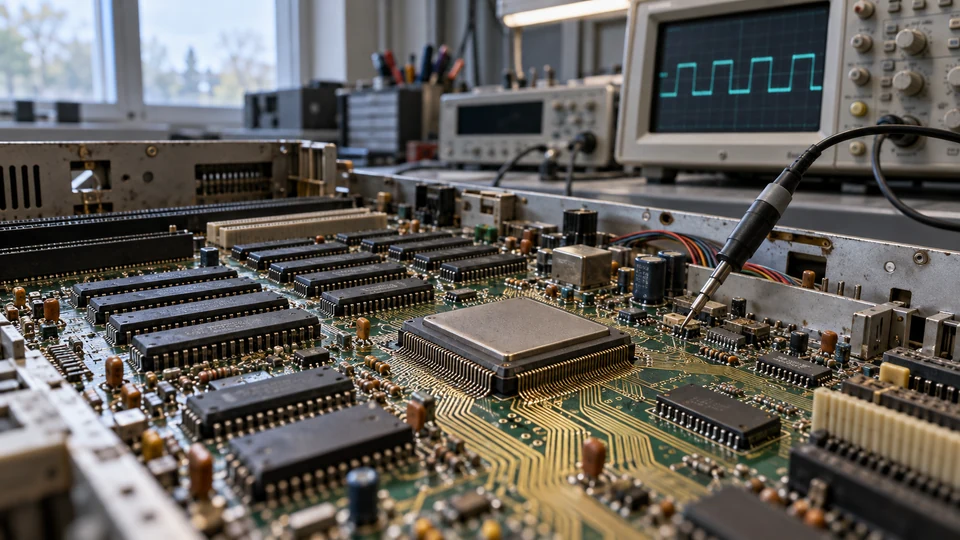
Hardware Emulation: Cycle Accuracy & Silicon Preservation
Table of Contents
- 01 The Silicon Divide and the Fragility of Physical Media
- 02 High-Level Emulation Versus Low-Level Cycle Accuracy
- 03 The Sega Saturn Architecture: Dual SH-2 and Distributed Silicon Complexity
- 04 FPGA Hardware Emulation: Recreating Silicon Gates with MiSTer
- 05 Optical Disc Drive Emulation and Capacitor Degradation
- 06 Timing Hazards and Bus Contention in Cycle-Accurate Execution
- 07 Shader Compilers and Audio Signal Processing in Modern Emulators
- 08 The Future of Silicon Preservation and Open Hardware Archives
The Silicon Divide and the Fragility of Physical Media
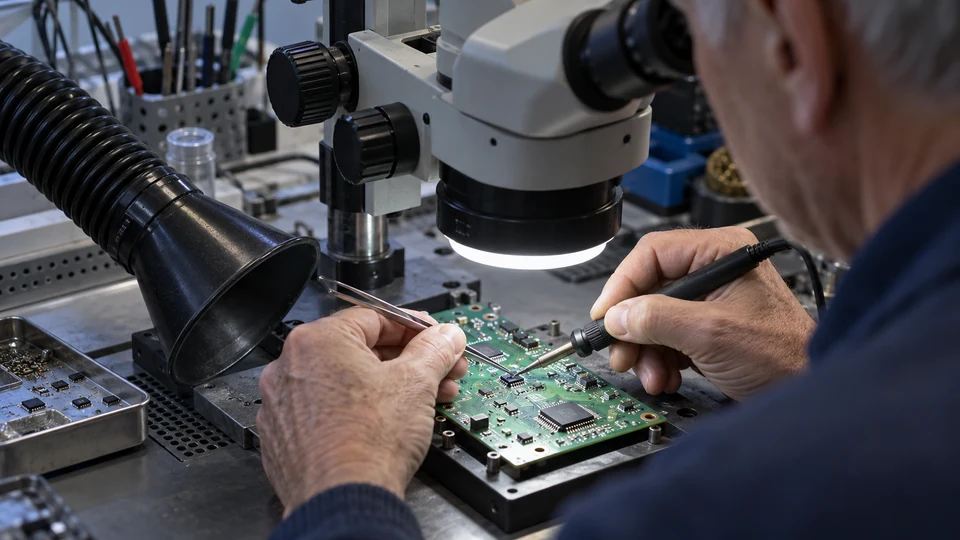
Video games are fundamentally tied to the physical silicon and copper architectures on which they were engineered. Unlike cinema, where a 35mm celluloid reel can be chemically stabilized or scanned at high resolution, or literature, where typography translates across centuries of printing technology, video games cannot execute without their native electrical computational environments.
Every console generation represents a bespoke labyrinth of custom integrated circuits: proprietary co-processors, custom sound synthesis units, unique bus arbitrators, and idiosyncratic video display controllers. As electrolytic capacitors leak, optical laser diodes lose beam intensity, and proprietary gate arrays suffer thermal degradation, physical consoles are steadily failing across the globe.
Hardware emulation is the technical discipline of translating or reproducing these obsolete silicon behaviors inside modern computational architectures, ensuring that interactive cultural artifacts survive long after their original physical motherboards have succumbed to component rot.
High-Level Emulation Versus Low-Level Cycle Accuracy
In the architecture of software emulation, developers navigate a fundamental engineering tradeoff between computational performance and electrical fidelity.
The foundational methodologies of emulation architecture:
- High-Level Emulation (HLE): HLE skips simulating the underlying silicon registers, logic gates, and bus timings altogether. Instead, it intercepts known system BIOS calls, API routines, and mathematical matrix functions, replacing them with native modern C++ or assembly algorithms. Projects like UltraHLE (1999) allowed Nintendo 64 software to run smoothly on modest Pentium II processors by intercepting graphics display lists. However, HLE relies on game-specific hacks, often failing when titles bypass official APIs to directly manipulate hardware registers.
- Low-Level Emulation (LLE): LLE attempts to simulate the exact physical logic gates, microcode instructions, memory registers, and peripheral buses of the original hardware. The gold standard of LLE is cycle accuracy, pioneered by the late Near (formerly byuu) with the bsnes/higan Super Nintendo emulator. In a cycle-accurate emulator, every master clock tick synchronizes the CPU, PPU (Picture Processing Unit), and APU (Audio Processing Unit). If a game relies on horizontal blanking scanline timing or undocumented CPU pipeline quirks, cycle-accurate LLE reproduces the behavior flawlessly without requiring title-specific patches.
The Sega Saturn Architecture: Dual SH-2 and Distributed Silicon Complexity
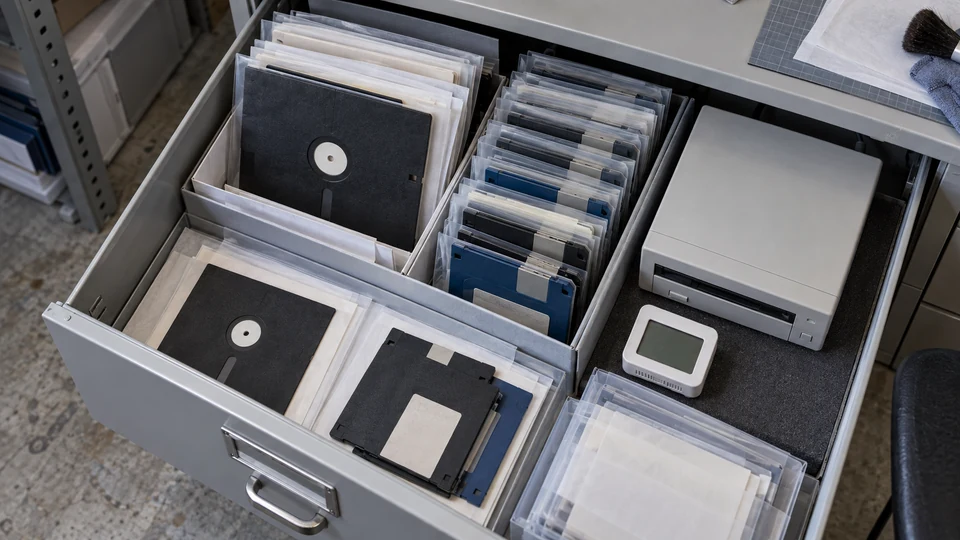
The Sega Saturn, released in 1994, remains one of the most notoriously difficult home consoles to emulate accurately due to its multiprocessor architecture. Rushed to market to compete with Sony's PlayStation, Sega engineers linked disparate chips together without unified memory arbitration.
The Saturn hardware configuration features:
- Dual Hitachi SH-2 32-bit RISC microprocessors running at 28.6 MHz in master-slave configuration with shared bus contention.
- VDP1 (Video Display Processor 1), which renders textured quadrilateral sprites rather than standard triangle polygons.
- VDP2 (Video Display Processor 2), an extraordinarily complex background rendering chip capable of managing multiple scrolling background planes with independent affine transformations, rotation, and color blending.
- Motorola 68EC000 sound processor controlling a Yamaha YMF292 Custom Sound Processor (SCSP) with 32 DSP channels.
- Hitachi SH-1 CPU dedicated purely to managing CD-ROM drive operations and security handshakes.
In early Saturn emulators, coordinating thread synchronization across eight independent processing units without CPU deadlock proved almost insurmountable. Emulators like SSF and Mednafen spent over fifteen years perfecting pipeline synchronization to run titles like Panzer Dragoon Saga and Burning Rangers without graphical tearing or desynchronized audio buffers.
FPGA Hardware Emulation: Recreating Silicon Gates with MiSTer
While software emulation executes on general-purpose host CPUs like Intel Core or AMD Ryzen processors, hardware description emulation uses Field-Programmable Gate Arrays (FPGAs) to physically recreate the original silicon logic gates.
The MiSTer FPGA project, spearheaded by Alexey Melnikov (Sorgelig) and based on the Terasic DE10-Nano development board, revolutionized digital preservation. Using Hardware Description Languages such as VHDL and Verilog, FPGA developers do not write software that mimics a chip; they configure thousands of configurable logic blocks (CLBs) to physically behave as the target processor.
Advantages of FPGA circuit recreation:
- True Parallel Execution: In an original console, the CPU, sound chip, and video generator execute concurrently on real electrical wires. Software emulators must time-slice these operations across CPU threads, which introduces micro-stutter and audio latency. FPGA hardware executes these operations simultaneously with zero software scheduling overhead.
- Sub-Millisecond Input Latency: Because FPGA cores interface directly with hardware controllers via USB polling or serial SNAC (Serial Native Accessory Converter) adapters, input latency matches original cathode-ray tube (CRT) hardware down to the individual scanline.
- Complete Clock Synchronization: Clock dividers, memory wait states, and bus multiplexing are synthesized at the nanosecond electrical level, eliminating edge-case emulation bugs.
Optical Disc Drive Emulation and Capacitor Degradation
Physical preservation of original hardware is increasingly confronting an unyielding enemy: chemical and mechanical component decay.
Critical points of hardware failure:
- Electrolytic Capacitors: SMD (surface-mount device) capacitors installed in consoles manufactured between 1989 and 2004—particularly the Sega Game Gear, PC Engine Duo, and original Xbox—utilize liquid electrolytes that leak caustic potassium hydroxide onto motherboard PCB traces, dissolving copper vias and causing catastrophic short circuits.
- Optical Laser Pickup Failure: CD, DVD, and GD-ROM optical pickups rely on delicate laser diodes and focusing coils that drift out of calibration or burn out entirely. Furthermore, disc spindle motors suffer bearing seizure.
- Optical Disc Drive Emulators (ODEs): Hardware engineers have designed ODEs—such as the Fenrir and Satiator for Sega Saturn, the MODE for Dreamcast/PlayStation, and the Xeno/GC Loader for GameCube. These devices replace mechanical laser assemblies with solid-state FPGA boards that read disc image ISO files directly from SD cards, preserving original motherboard processing while eliminating failure-prone mechanical disc drives.
Timing Hazards and Bus Contention in Cycle-Accurate Execution
The primary difficulty in low-level emulation stems from undocumented hardware quirks that developers exploited during the console's commercial lifecycle. When programmers pushed hardware to its absolute limits, they often relied on unintended electrical race conditions, pipeline delays, and memory bus collisions.
Classic examples of hardware timing edge cases:
- Super Nintendo Mid-Scanline Register Writes: Programmers wrote to PPU registers mid-scanline to create wavy underwater raster effects or shadow overlays. If an emulator executes even two CPU cycles ahead of the PPU clock, the raster effect renders with jagged visual corruption.
- Game Boy LCD Controller Stat Interrupts: Titles like The Legend of Zelda: Link's Awakening manipulated LCD status interrupts precisely during horizontal blanking transitions. Miscalculating memory access wait states by a single microsecond causes sprite flickering or hard system lockups.
- Memory Bus Contention: On platforms like the ZX Spectrum or Commodore 64, the video generation chip pauses CPU memory access whenever it reads character data from video RAM (the snow effect or ULA contention). Emulating this requires calculating clock-by-clock memory access arbitration.
Shader Compilers and Audio Signal Processing in Modern Emulators
As emulators tackle sixth and seventh-generation systems like the PlayStation 2 (PCSX2), GameCube/Wii (Dolphin), and Xbox 360 (Xenia), the graphics pipeline shifts from simple tile maps to complex programmable shader pipelines.
Technical hurdles in modern graphics and audio emulation:
- On-the-Fly Shader Translation: Legacy microcode shaders written for proprietary architectures must be dynamically disassembled and recompiled into modern Vulkan or DirectX 12 SPIR-V shaders during runtime. Early implementations suffered from severe shader compilation stutter, which modern emulators mitigate through asynchronous shader compilation and persistent pipeline caches.
- DSP Audio Emulation: Audio synthesizers, such as the GameCube's Macronix DSP running at 81 MHz or the PlayStation 2's SPU2, executed real-time reverberation filters, ADPCM decompression, and pitch modulation. Emulating these audio processors without desynchronizing from video frame delivery requires dynamic audio resampling and circular ring buffer interpolation.
The Future of Silicon Preservation and Open Hardware Archives
Hardware emulation is not a luxury or a hobbyist convenience; it is the sole technological mechanism preventing fifty years of interactive computational history from vanishing into silence. As physical consoles degrade and proprietary silicon dies in private collections, open-source emulation codebases represent living blueprints of humanity's digital heritage.
By documenting every logic gate, memory map, bus timing, and audio register in rigorous, open-source C++, Rust, and Verilog repositories, emulation engineers ensure that future generations can study, play, and understand the virtual worlds created during the dawn of interactive entertainment.