Source Code Archaeology: Decompilation & Community Ports
Table of Contents
- 01 The Lost Codebases of Commercial Video Games
- 02 Binary Disassembly and Interactive Decompilation with Ghidra and IDA Pro
- 03 The Super Mario 64 and The Legend of Zelda: Ocarina of Time Decompilation Breakthroughs
- 04 Clean-Room Rules: The Sacred Boundary Between Assembly Matching and Copyright Infringement
- 05 Asset Extraction: Separating Intellectual Property from Native Engine Binaries
- 06 64-Bit Modernization, Widescreen Scaling, and High Refresh Rates
- 07 The Resurrection of Silent Hill 2: Enhanced Edition and Community Engine Patching
- 08 Reverse-Engineered File Formats: Unpacking Proprietary Archives and Compression
- 09 Preserving Authorial Intent in Native Executable Restorations
The Lost Codebases of Commercial Video Games

In the commercial video game industry, source code preservation has historically been an afterthought. Throughout the 1980s, 1990s, and early 2000s, video games were treated as ephemeral consumer goods: once a title shipped to retail shelves, development hard drives were routinely wiped, backup magnetic tapes were discarded in office moves, and source repositories were abandoned as studios suffered bankruptcy or acquisition.
When modern publishers seek to re-release classic titles, they frequently discover that the original source code no longer exists anywhere on Earth. Square Enix famously discovered that the original source assets for Final Fantasy VIII had been lost, requiring subsequent remasters to reverse-engineer retail builds. Konami faced similar catastrophic archival failures with Silent Hill 2 and 3, forcing the ill-fated Silent Hill HD Collection to be assembled from incomplete, buggy pre-release development branches.
Faced with this institutional corporate neglect, community software engineers developed the discipline of digital archaeology: using binary disassembly, decompilation, and asset extraction to reconstruct clean, compilable C and C++ source code directly from commercial ROMs and retail binaries.
Binary Disassembly and Interactive Decompilation with Ghidra and IDA Pro
When a game is compiled, human-readable source code is translated by a compiler into raw machine code: streams of binary instructions executed directly by a target CPU (such as MIPS, ARM, PowerPC, or x86).
The digital archaeologist's investigative toolkit:
- Disassemblers (IDA Pro, Ghidra, radare2): A disassembler translates raw hexadecimal opcodes into human-readable assembly instructions (e.g., MOV, ADD, JMP, LW).
- Control Flow Graph (CFG) Analysis: Modern reverse-engineering tools analyze conditional branches and jump tables, generating visual control flow graphs that map the structural skeleton of functions, loops, and recursive calls.
- Decompiler Engines: Decompilers use abstract syntax trees and intermediate representations to convert assembly instructions back into high-level C pseudo-code. However, compiled binaries strip away all human signposts: variable names, function identifiers, struct layouts, comments, and typedefs are completely eliminated, leaving behind an anonymous ocean of pointer arithmetic and register offsets.
The Super Mario 64 and The Legend of Zelda: Ocarina of Time Decompilation Breakthroughs
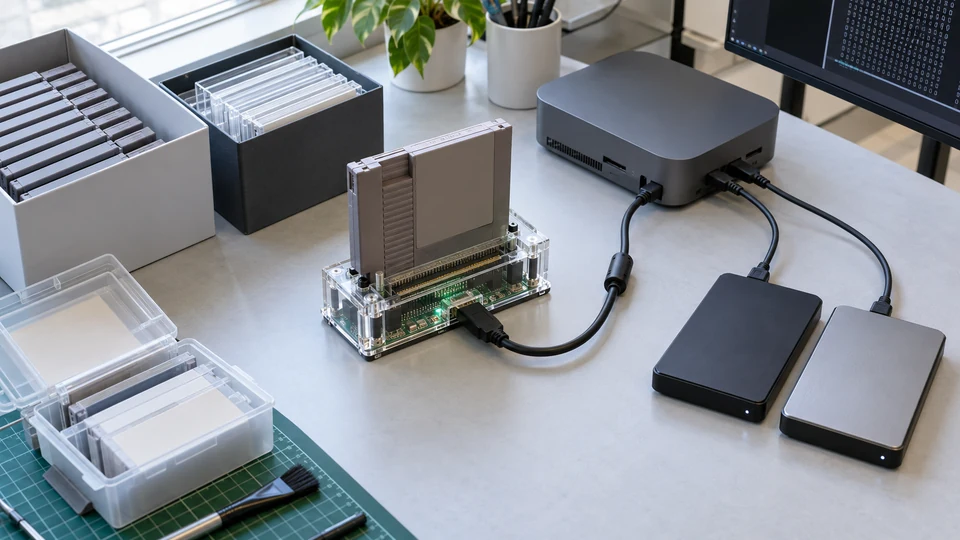
The gold standard of digital archaeology is matching decompilation: reconstructing an entire game codebase in C such that when compiled with the original compiler flags, it produces an exact, byte-for-byte identical binary to the original commercial ROM.
Monumental matching decompilation milestones:
- Super Mario 64 (sm64 Decompilation Project): Completed in 2019, volunteer reverse engineers analyzed Nintendo's 1996 MIPS assembly binary, manually reconstructing every C function, player physics vector, camera state machine, and collision matrix. When compiled with the original Silicon Graphics IDO (IRIX Development Option) compiler, the generated binary matched the Japanese and North American ROMs down to the final byte.
- The Legend of Zelda: Ocarina of Time (Ship of Harkinian / Zelda64): Completed by the Zelda Reverse Engineering Team (ZRET) in 2021, this project decompiled over 64 megabytes of complex actor hierarchies, cinematic sequencer logic, and dynamic audio sequencing. It served as the foundation for the Ship of Harkinian native PC port, which introduced 60+ FPS interpolation, ultra-widescreen rendering, high-definition textures, and modern camera controls.
Clean-Room Rules: The Sacred Boundary Between Assembly Matching and Copyright Infringement
Matching decompilation projects must navigate stringent intellectual property legal doctrines. If a project inadvertently incorporates proprietary leaked source code, it loses legal immunity and faces instant destruction under DMCA copyright injunctions.
To preserve absolute legal integrity, reverse engineering teams implement strict clean-room protocols:
- Prohibition of Leaked Materials: Anyone who has viewed leaked source code (such as the infamous 2020 Nintendo Gigaleak) is strictly banned from contributing code to the decompilation repository.
- Black-Box Observation and Decompilation Isolation: Engineers work purely from commercial, legally obtained retail binaries. They document register behaviors, function inputs, and return states.
- Mathematical and Algorithmic Equivalence: Writing C code that compiles to identical assembly instructions is legally recognized in the United States and European Union as functional reverse engineering and interoperability research, distinct from copyright infringement.
Asset Extraction: Separating Intellectual Property from Native Engine Binaries
The critical legal innovation of modern community source ports is the complete decoupling of executable engine logic from proprietary creative assets.
The asset extraction pipeline:
- Pure Code Distribution: Open-source repositories contain only source code files (C/C++ headers and implementation files). They do not contain a single copyrighted texture, 3D model, sound effect, musical score, or script dialogue file.
- Automated Extraction Tools: When a user downloads a source port like Ship of Harkinian or the sm64-port, the installer requires the user to supply their own legally dumped commercial ROM file.
- Slicing and Formatting: An automated script parses the supplied ROM, unpacks proprietary compressed archives (e.g., Yaz0 or MIO0 compression), extracts the audio banks and geometry data, and converts them into modern engine formats during local compilation.
64-Bit Modernization, Widescreen Scaling, and High Refresh Rates
Once a game exists as native, clean C code, it is freed from the computational shackles of legacy hardware. Rather than running inside an emulator that must simulate an entire simulated hardware console with significant CPU overhead, the game compiles as a native 64-bit Windows, Linux, macOS, or Android application.
Transformative technical benefits of native source ports:
- True Arbitrary Resolution: Legacy renderers tied to 320x240 or 640x480 can be rewritten using modern Vulkan, DirectX 12, or OpenGL renderers capable of rendering native 4K and 8K resolutions with pristine geometry clarity.
- Ultra-Widescreen and Aspect Ratio Adaptation: Native projection matrices can be adjusted dynamically for 16:9, 21:9, and 32:9 displays without stretching 4:3 UI elements or distorting field-of-view geometry.
- Frame Rate Decoupling: In many retro titles, physics simulations, animation timers, and game logic were hardcoded to the 20 Hz or 30 Hz console refresh rate. Archaeologists decouple the game loop from the render loop, utilizing sub-tick interpolation to deliver buttery-smooth 144 Hz and 240 Hz gameplay.
The Resurrection of Silent Hill 2: Enhanced Edition and Community Engine Patching
While matching decompilation is common for cartridge games, complex sixth-generation PC ports often benefit from surgical binary patching and engine wrapper development.
The Silent Hill 2: Enhanced Edition project represents a masterclass in digital forensic restoration:
- Fixing a Broken PC Port: Konami's 2002 PC port of Silent Hill 2 suffered from broken fog shaders, stretched 16:9 FMVs, corrupted 3D positional audio, and crash bugs on multi-core processors.
- Memory Injection and Assembly Hooks: Rather than having access to source code, developers wrote dynamic DLL wrappers that hook into the game's executable memory space at runtime, patching broken x86 assembly instructions, replacing low-resolution textures with pristine uncompressed PlayStation 2 assets, and re-implementing 3D environmental audio via OpenAL Soft.
- Fog Geometry Shader Reconstruction: The team meticulously reverse-engineered the PS2's Vector Unit 1 (VU1) procedural fog code, writing custom DirectX 9 and 11 vertex shaders that restored the iconic volumetric atmosphere lost in the original PC release.
Reverse-Engineered File Formats: Unpacking Proprietary Archives and Compression
A crucial sub-discipline of digital archaeology is cracking proprietary data formats. Developers in the 1990s engineered custom compression routines and archive containers to squeeze data onto limited storage media.
Prominent archival reverse engineering achievements:
- ScummVM: ScummVM reverse-engineered dozens of proprietary adventure game script interpreters—including LucasArts' SCUMM, Sierra's SCI/AGI, and Revolution's Virtual Theatre—allowing classic adventure games to execute flawlessly across hundreds of modern computing platforms.
- OpenMW: OpenMW created an entirely new open-source C++ game engine that natively loads Bethesda's proprietary ESM/ESP plugin formats, NIF 3D mesh files, and animation structures from The Elder Scrolls III: Morrowind.
- OpenRA: OpenRA rebuilt the engine behind Command & Conquer, Red Alert, and Dune 2000, upgrading classic 2D RTS titles with modern pathfinding algorithms and balance configurations.
Preserving Authorial Intent in Native Executable Restorations
Digital archaeology is not merely a technical exercise in software optimization; it is an act of cultural curation. By lifting vintage video games out of decaying physical media and translating their assembly foundations into clean, human-readable source code, community engineers ensure that these masterpieces remain accessible, moddable, and immortal.
These source ports stand as monumental digital monuments to human creativity, proving that when corporations allow interactive heritage to wither, the collective dedication of community archaeologists will keep the flame of gaming history alive.