Visionary Games: Revolutionary Mechanics Ahead of Their Time
Table of Contents
- 01 The Dilemma of the Premature Masterpiece
- 02 Jurassic Park: Trespasser and the Dawn of Physics Engines
- 03 Shenmue: The Genesis of the Open-World Life Simulator
- 04 Pathologic: The Psychological Toll of Mechanical Hostility
- 05 The Void and Beyond Good & Evil: Systemic Experimentalism
- 06 The Enduring Legacy of Creative Audacity
The Dilemma of the Premature Masterpiece
Game development history is punctuated by visionary titles that suffered devastating commercial failure at launch, only for their core design mechanics to be adopted as industry-standard conventions a decade later. This dynamic, known as premature innovation, arises when a game's structural ambition outpaces the technical capacity of contemporary silicon hardware, the commercial viability of existing distribution channels, or the mechanical literacy of mainstream audiences.
When a studio invents entirely novel gameplay paradigms without established market references, marketing teams struggle to communicate the experience to consumers, and critics frequently penalize the software for technical instability or steep learning curves. Complex physics simulations, emergent artificial intelligence routines, and non-linear narrative choices require substantial CPU clock cycles. On early hardware, these ambitions frequently caused crippling frame rate dips and game-breaking collision bugs that overshadowed the genius of the underlying game design.
Jurassic Park: Trespasser and the Dawn of Physics Engines
Released in 1998 by DreamWorks Interactive, Jurassic Park: Trespasser is widely remembered as a deeply flawed commercial disaster. Yet from a pure engineering perspective, it stands as one of the most astonishingly visionary software projects in interactive computing history. Conceived by lead programmer Seamus Blackley, Trespasser sought to eliminate all artificial arcade abstractions and create a completely simulated physical reality running entirely on software CPU calculations, years prior to hardware-accelerated physics processing units.
Trespasser introduced several paradigm-shifting mechanics:
- Pure Rigid-Body Physics Simulation: Every crate, barrel, bone, and rock possessed mathematically modeled mass, friction, and inertia. Puzzles required stacking physical objects or wedging planks to traverse terrain, anticipating the core physics puzzles of Half-Life 2 by six years.
- Fully Diegetic User Interface: There were no on-screen health bars, crosshairs, or ammunition counters. The player evaluated ammunition by manually counting spoken audio cues from voice actress Minnie Driver, and monitored physical health via a heart tattoo rendered directly on the protagonist's chest model.
- Inverse Kinematics and Arm Manipulation: Players manually controlled the protagonist's right arm across six degrees of freedom, manipulating objects and aiming firearms using coordinate mouse tracking rather than canned animations.
- Procedural Skeletal Animation: Dinosaurs did not rely entirely on scripted animation cycles; their movement vectors adjusted dynamically based on topographical slopes and physical terrain collisions.
Why it failed commercially: Consumer microprocessors in 1998 lacked the floating-point calculation performance required to execute real-time collision detection algorithms alongside software rendering. The game suffered catastrophic performance degradation, awkward control ergonomics, and extensive physics instability, bankrupting the studio's technical reputation despite essentially blueprinting the future of immersive first-person interaction.
Shenmue: The Genesis of the Open-World Life Simulator
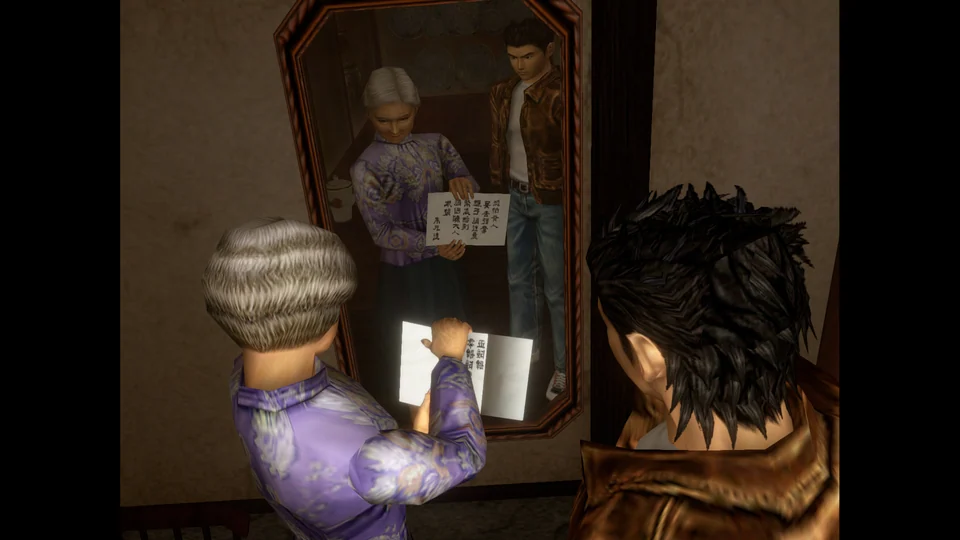
When Yu Suzuki and Sega AM2 released Shenmue on the Sega Dreamcast in 1999, it represented the most expensive video game production ever mounted, with development costs estimated between 47 and 70 million dollars. Suzuki sought to create an entirely new genre termed FREE (Full Reactive Eyes Entertainment), constructing an unprecedentedly detailed digital recreation of 1986 Yokosuka, Japan.
Shenmue established foundational conventions that modern open-world blockbusters like Grand Theft Auto, Yakuza, and Red Dead Redemption 2 now take for granted:
- Fully Scheduled Non-Player Character Routines: Every single resident of Yokosuka possessed an individual name, voice actor, unique daily agenda, morning commute, workplace duties, and evening bedtime routine.
- Real-Time Dynamic Meteorology: The Magic Weather system simulated historic weather data from 1986 Yokosuka, shifting dynamically from morning fog to afternoon rain and evening snowfall.
- Unprecedented Environmental Interactivity: Players could enter nearly every storefront, open desk drawers, inspect individual canned sodas, and purchase physical capsule toys using realistic currency denominations.
- Quick Time Events (QTE): Suzuki coined the term QTE to seamlessly transition narrative cinematics into responsive controller interactions, a mechanic subsequently adopted throughout the AAA industry.
Why it failed commercially: Shenmue required an impossible commercial conversion rate to recoup its massive budget. Given the limited installed base of the Sega Dreamcast hardware, even if every Dreamcast owner had purchased multiple copies, the project could not break even. Furthermore, mainstream audiences accustomed to high-tempo arcade experiences struggled with Shenmue's deliberate, slow-paced investigative rhythm, which prioritized methodical questioning and mundane convenience store visits over rapid combat.
Pathologic: The Psychological Toll of Mechanical Hostility
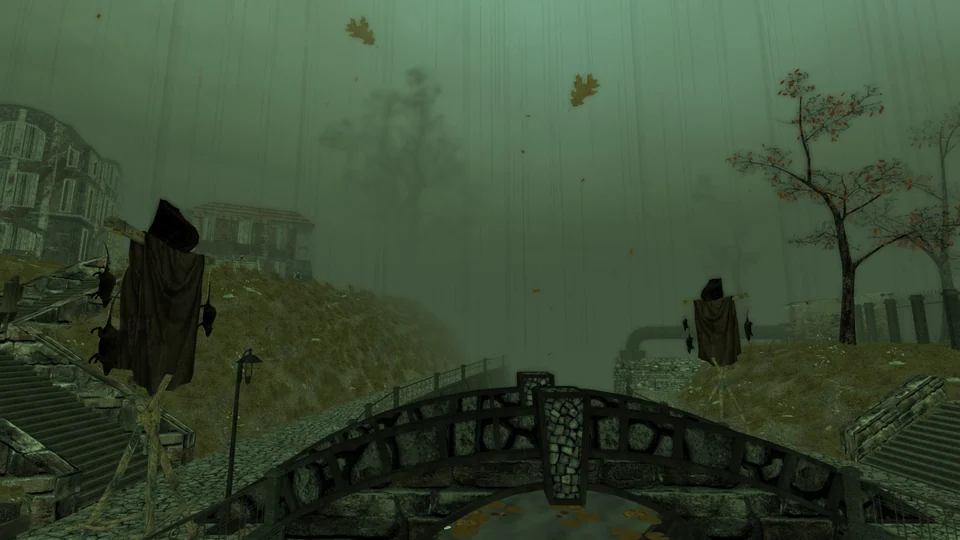
Developed by Russian indie studio Ice-Pick Lodge and released in 2005, Pathologic subverted the fundamental assumption that video games exist to provide comfortable player empowerment. Set within an isolated steppe town consumed by an invisible, lethal plague known as the Sand Pest, Pathologic forced players to choose one of three healers attempting to understand the disease across twelve grueling real-time days.
Innovative design vectors introduced by Pathologic:
- Anti-Empowerment Game Design: The game actively undermined the player's heroism. Survival mechanics for hunger, exhaustion, immunity, and infection operated with punishing degradation curves, forcing players to barter precious medical supplies with street orphans or trade clean bandages for scrap metal.
- Asynchronous Narrative Perspectives: The three playable characters (the Bachelor, the Haruspex, and the Devotress) operated simultaneously within the same physical timeline. While playing as one protagonist, the other two pursued their own independent investigations, often arriving at conflicting ethical conclusions.
- Diegetic Theatrical Framing: The game presented its world as an explicit theatrical performance, with masked mimes delivering cryptic philosophical lectures regarding the artificiality of digital morality.
Why it failed commercially: Pathologic featured harsh visual fidelity, unforgiving combat mechanics, and an infamously broken initial English localization that obscured the brilliance of its philosophical script. The game demanded extraordinary mental resilience from players, refusing to reward conventional exploration and regularly punishing users for trying to save every citizen.
The Void and Beyond Good & Evil: Systemic Experimentalism
The annals of gaming history feature additional singular projects whose mechanical experiments arrived decades ahead of commercial reception:
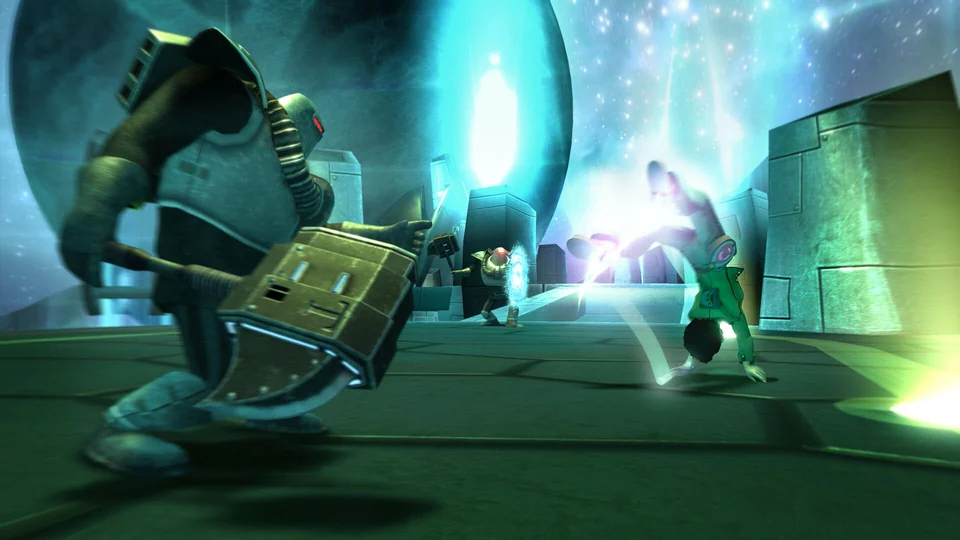
- The Void (Tension, 2008): Another Ice-Pick Lodge masterwork that replaced conventional health and mana with visual pigments that had to be physically drawn onto the screen using mouse strokes. Pigments acted simultaneously as your life force, your ammunition, your currency, and your ethical footprint on a dying purgatorial world. The game forced users to manage color consumption with ecological mindfulness.
- Beyond Good & Evil (2003): Directed by Michel Ancel at Ubisoft, this hybrid adventure combined investigative wildlife photography, stealth infiltration, hovercraft racing, and anti-authoritarian political journalism inside a coherent satirical sci-fi ecosystem. While critically adored, it launched in an overcrowded holiday window and floundered commercially before achieving long-term cult adoration.
These titles proved that when game systems interact dynamically rather than sitting in isolated code modules, player agency expands exponentially.
The Enduring Legacy of Creative Audacity
Studying games that were ahead of their time illuminates the nonlinear progression of creative software engineering. Innovation rarely emerges in tidy, commercially profitable packages. It frequently appears as raw, unpolished, and commercially disastrous experiments that shatter contemporary conventions to demonstrate what the interactive medium might eventually achieve.
The failures of Trespasser, Shenmue, Pathologic, and The Void were not wasted efforts. They functioned as vital signposts that informed subsequent generations of game directors, engine architects, and systems designers. By daring to push past technological limitations before hardware was fully ready, these projects proved that video games could simulate physical reality, dynamic human societies, and psychological discomfort, forever expanding the horizons of the medium.
When we examine the genealogy of modern gaming's greatest achievements, their mechanical foundations almost invariably trace back to these courageous, misunderstood experiments that dared to innovate a decade before the world was ready.