Digital Sanctuaries: Warm Respite & Cozy Safe Havens
Table of Contents
- 01 The Architecture of Safety: Contrast and Enclosure
- 02 The Bonfire and the Bench: Safe Havens in Hostile Worlds
- 03 Firewatch and the Two Forks Lookout: Elevated Isolation
- 04 Acoustic Intimacy and Sound Design for Rest Spaces
- 05 Spaceship Cabins and Mobile Havens
- 06 Domestic Haven Building: Stardew Valley and Animal Crossing
- 07 The Enduring Psychological Value of Virtual Respite
The Architecture of Safety: Contrast and Enclosure

A cozy space in a video game cannot exist in a vacuum. Its psychological potency is fundamentally defined by contrast. Without the howling blizzard outside, the crackling hearth in a mountain shelter possesses no warmth. Without the terrifying monstrosities stalking the fog of Lordran, the golden radiance of a Dark Souls bonfire offers no emotional catharsis. Game designers construct cozy spaces not by maximizing luxury, but by engineering a precise dialectic between external peril and internal sanctuary.
Environmental psychologists describe this dynamic through prospect-refuge theory, originally articulated by geographer Jay Appleton. Human beings experience aesthetic pleasure in environments that offer refuge (places to hide, rest, and sleep where one cannot be seen from behind) combined with prospect (an unimpeded visual view of surrounding territory to monitor potential hazards).
In video game level design, effective sanctuaries exploit these primal instincts through spatial gating:
- Narrow Threshold Transitions: Players enter cozy spaces through compressed choke points, low doorways, or winding subterranean tunnels that physically shield them from the open, hostile world.
- Low Ceilings and Tactile Enclosures: Sanctuaries feature smaller bounding boxes, timber beams, heavy drapery, and warm, tactile materials that psychologically wrap around the player avatar.
- Acoustic Filtering: The oppressive ambient noise of the external world—howling gale winds, monster roars, distant artillery—is suddenly muffled by a low-pass audio filter upon crossing the threshold, replaced by dry, intimate sounds.
- Perimeter Lighting Gradients: Safe spaces prioritize warm, localized point-light sources (such as lanterns, candles, and hearths) that fall off quickly into soft amber shadows, creating a luminous bubble surrounded by darkness.
The Bonfire and the Bench: Safe Havens in Hostile Worlds
Action RPGs and survival horror titles have perfected the micro-sanctuary: small, isolated resting points that offer momentary respite within relentlessly punishing worlds.
FromSoftware's bonfires are masterclasses in minimalist sanctuary design. Mechanically, they reset player health, recharge Estus flasks, and provide a respawn anchor. Emotionally, their hypnotic, slow-burning embers and gentle acoustic hum provide profound psychological relief. In a game where every corridor conceals lethal ambushes, sitting at a bonfire allows the player's tense muscles to relax, knowing that game systems cannot harm them while rested. The presence of the coiled sword embedded in pale ashes symbolizes an ancient covenant of peace amidst entropy.
- The Bonfire in Dark Souls:
Capcom's save rooms are legendary for their atmospheric isolation. The moment the player turns the handle of a save room door in the Spencer Mansion or Raccoon City Police Department, the horrific groans of the undead abruptly cut out, replaced by delicate, melancholy piano arpeggios composed by Masami Ueda. The presence of the green desk lamp, the mechanical typewriter, and the item storage trunk transforms a tiny square room into an impregnable fortress of psychological security. The physical sound of typewriter keys striking paper acts as an auditory milestone of survival.
- The Save Room in Resident Evil:
Team Cherry placed iron benches throughout the sprawling subterranean insect kingdom of Hallownest. When the Knight sits down, the game zooms the camera in, relaxing the character's combat stance while delicate ambient chimes play. Other friendly travelers, such as Quirrel or Cloth, occasionally share the bench, fostering touching moments of quiet camaraderie amidst dying ruins.
- The Bench in Hollow Knight:
Firewatch and the Two Forks Lookout: Elevated Isolation

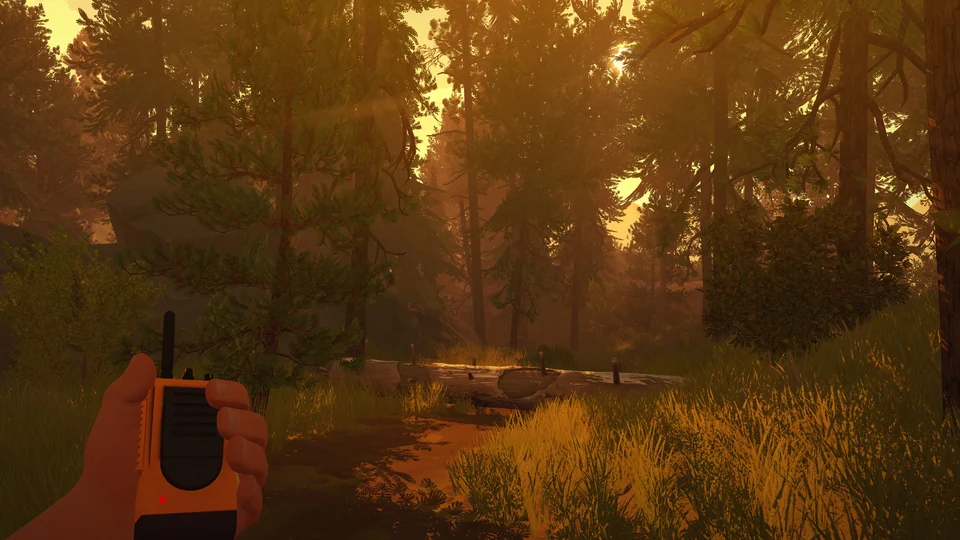
Campo Santo's Firewatch (2016) explored a unique variation of the sanctuary archetype: the Two Forks fire lookout tower perched high above the wilderness of Shoshone National Forest.
Elements that make the lookout tower unforgettable:
- Domesticity Against the Wild: The wooden cabin features authentic 1980s paraphernalia: a manual typewriter, paperback novels, a yellowing topographic map desk, a small gas stove, and a comfortable cot. The interior smells of pine wood and old paper, creating an intimate domestic anchor in the middle of vast Wyoming wilderness.
- Panoramic Vista (Prospect and Refuge Combined): The wrap-around glass windows offer an uninterrupted 360-degree view of pine canopies, distant granite ridges, and shifting storm clouds. The player feels sheltered from the elements while maintaining complete visual command of the surrounding landscape.
- The Radio Lifeline: The handheld walkie-talkie connecting the protagonist Henry to his supervisor Delilah acts as an acoustic sanctuary. Delilah's voice fills the quiet wooden cabin with warmth, humor, and emotional vulnerability, transforming physical isolation into a deeply comforting human connection.
Acoustic Intimacy and Sound Design for Rest Spaces
Sound design is the invisible architect of comfort. While visual assets establish physical boundaries, acoustic engineering directly triggers autonomic nervous system relaxation in the player.
Core acoustic techniques used in cozy game spaces:
- Near-Field Foley Recording: Sound designers record foley assets mere inches from the microphone to capture micro-textures: the wet sizzle of tea brewing in a kettle, the soft scrape of a wooden chair leg across flagstones, the rhythmic rustle of turning book pages, or the gentle crackle of dry pine bark burning in a fireplace.
- Reverb Dampening: Exterior combat environments typically utilize long reverberation tails to simulate expansive canyons or cavernous halls. Stepping into a cozy interior instantly collapses reverberation time to near zero, creating an auditory sensation of physical intimacy.
- Melodic Simplicity and Harmonic Resolution: Sanctuary background tracks intentionally avoid unresolved dissonances or dramatic dynamic shifts. Composers employ simple modal melodies on classical guitar, acoustic piano, or woodwinds, looped with seamless crossfades that melt into the subconscious background.
- Environmental Patter: Gentle precipitation hitting wooden roof shingles or glass skylights triggers ASMR-like calming responses, reinforcing the comforting awareness that the elements cannot penetrate the sanctuary.
Spaceship Cabins and Mobile Havens
Cozy spaces are not confined to pastoral fantasy cottages. Some of the most compelling sanctuaries in gaming history exist inside high-technology vessels navigating the freezing void of deep space.
Shepard's private quarters aboard the Normandy offer a bespoke retreat from the existential terror of the Reaper invasion. Featuring a personal fish tank, a model ship display, a sound system playing soothing ambient tracks, and panoramic observation glass looking out into the nebula, the cabin functions as a deeply personal emotional haven where the protagonist can lower their military armor.
- The Normandy SR-2 Captain's Cabin (Massive Effect 2 & 3):
Mobius Digital crafted an extraordinary mobile sanctuary in the player's rickety wooden and titanium spaceship. Navigating terrifying cosmic anomalies—black holes, anglerfish-infested bramble dimensions, and collapsing quantum moons—the small ship cabin with its vibrating flight controls, tape-deck audio log, and bubbling zero-gravity tea kettle becomes the player's lifeline to warmth and sanity. Roasting marshmallows over the campfire on the launchpad with Riebeck's banjo echoing across the solar system remains an indelible emotional touchstone.
- The Cockpit in Outer Wilds:
Capcom designed the canteen as a sensory celebration of nourishment and companionship. Watching the Meowscular Chef flambé enormous roasts, steam dumplings, and ladle thick stews accompanied by joyful feline culinary chants primes the player for grueling hunts. Sitting around the timber banquet table with fellow hunters transforms dangerous expeditions into a shared domestic feast.
- The Gathering Hub and Canteen (Monster Hunter: World):
Domestic Haven Building: Stardew Valley and Animal Crossing
Cozy game spaces frequently empower the player to become the architect of their own comfort. In life simulation titles like ConcernedApe's Stardew Valley and Nintendo's Animal Crossing: New Horizons, sanctuary design shifts from passive refuge to active creative self-expression.
Mechanisms of domestic satisfaction in life simulations:
- Customizable Domestic Layouts: Arranging rugs, bookshelves, warm table lamps, and houseplants inside a modest farmhouse provides a profound psychological sense of ownership. Upgrading a dilapidated rural shack into a cozy hearth-lit home mirrors personal healing narratives.
- Daily Routine Loops: Tending crops at dawn, greeting eccentric townsfolk, fishing along tranquil riverbanks during sunset, and returning to a warm wooden bed before midnight establishes a soothing circadian rhythm that counteracts the chaotic anxieties of modern life.
- Acoustic Serenity: The gentle acoustic guitar loops of Stardew Valley's seasonal music and the relaxing hourly synth-chimes of Animal Crossing act as auditory hugs, grounding the player in a world where time is generous, mistakes are gentle, and growth is constant.
The Enduring Psychological Value of Virtual Respite
In modern gaming, where engagement algorithms, competitive ladders, and high-octane sensory overload dominate commercial releases, cozy game spaces provide vital psychological decompression. They remind players that stillness, reflection, and quiet companionship are just as essential to interactive art as kinetic action and competitive mastery.
A truly memorable cozy game space is not a distraction from the adventure; it is the emotional heart that gives the entire journey its meaning. By offering a sanctuary within the digital storm, game designers create spaces where players feel truly protected, peaceful, and home, anchoring our fondest interactive memories in moments of warm and gentle quiet.