Abandoned Franchises: Forgotten Cult Classics & Studio Closures
Table of Contents
The Pathology of Corporate Franchise Abandonment
In the contemporary video game industry, franchise abandonment is rarely a consequence of creative exhaustion. Rather, it represents the calculated outcome of corporate consolidation, budget escalation, and risk-averse publishing economics. During the fifth, sixth, and seventh console generations, mid-tier development studios operated with production budgets that allowed for creative risk-taking. A publisher could fund innovative projects like Legacy of Kain, Parasite Eve, or Jet Set Radio with the expectation that selling between 500,000 and 1.5 million copies would generate sustainable operating profits.
The modern consolidation of AAA game development into multi-hundred-million-dollar production and marketing expenditures fundamentally distorted these publishing incentives. Today, major corporate enterprises prioritize live-service monetization models, recurring engagement loops, and broad demographic appeal. Unique franchises with unconventional gameplay mechanics, gothic storytelling themes, or niche target audiences are viewed through corporate risk assessment formulas as inadequate investments.
Consequently, iconic intellectual properties become stranded within corporate holding entities. When studio acquisitions take place, acquiring conglomerates absorb massive portfolios of legacy trademarks and copyrights. The parent companies frequently retain these rights purely for defensive asset valuation, refusing to authorize internal development while simultaneously threatening independent developers with trademark litigation if similar titles emerge.
Case Studies in Intellectual Property Gridlock
Examining specific abandoned franchises reveals the intricate web of corporate mergers, rights fragmentation, and studio closures that keep legendary series dormant.
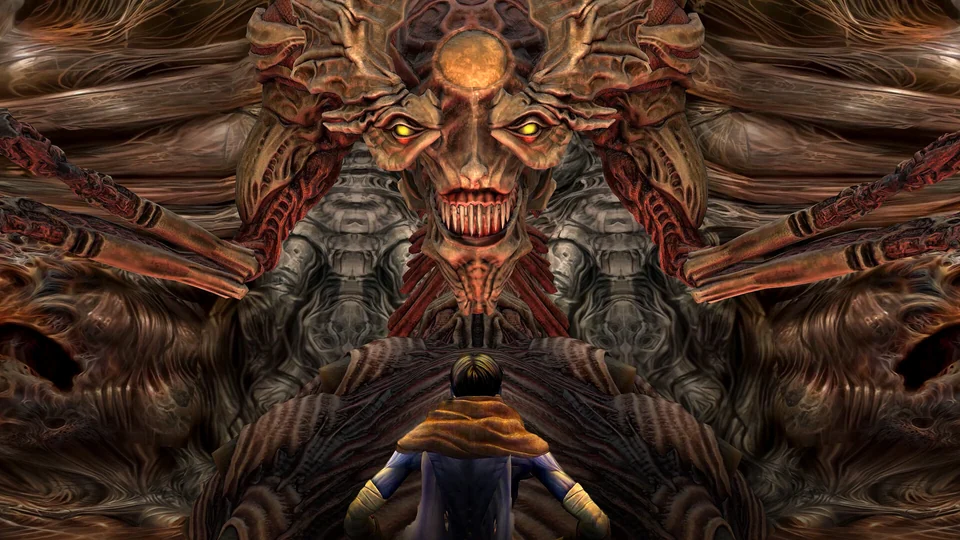
Pioneered by Silicon Knights and visionary narrative designer Amy Hennig at Crystal Dynamics, the Legacy of Kain saga established benchmark standards for Shakespearean voice acting, non-linear gothic exploration, and time-travel narrative complexity. Following the release of Defiance in 2003, multiple sequel attempts were canceled, including the ill-fated multiplayer spin-off Nosgoth. The intellectual property transitioned through Eidos Interactive to Square Enix, and subsequently to Embracer Group, leaving the franchise dormant for over two decades despite widespread critical acclaim.
- Legacy of Kain / Blood Omen (1996-2003):
Developed by Monolith Productions, The Operative: No One Lives Forever and its sequel delivered brilliant 1960s espionage satire, sophisticated enemy artificial intelligence, and genre-defining level design. The series remains completely unpurchaseable on digital storefronts due to an infamous corporate copyright labyrinth. The underlying publishing rights and trademarks were fractured across Warner Bros. Interactive, Activision, and 20th Century Studios (now Disney) following a decades-long sequence of mergers. Independent publisher Nightdive Studios attempted to license the rights for a remaster, but legal teams from all three conglomerates admitted they could not conclusively determine who owned which fraction of the code, warning that any release would trigger defensive copyright lawsuits.
- No One Lives Forever (2000-2002):
Capcom's premier turn-based role-playing series combined traditional fantasy archetypes with intricate dragon transformation systems, isometric diorama world building, and unique anthropomorphic character design. Breath of Fire: Dragon Quarter (2002) was an astonishingly ahead-of-its-time survival RPG featuring rogue-like restart loops and claustrophobic subterranean settings. Capcom abandoned the core series following market trends, briefly reviving the name in 2016 for an ill-fated mobile title that was shuttered after minimal traction.
- Breath of Fire (1993-2002):
Square's cinematic biological horror RPG adapted Hideaki Sena's sci-fi novel into an intense, real-time tactical combat masterpiece set against snowy Manhattan. The rights complexity between Square Enix and the original novelist prevented subsequent sequels from using the original trademark, resulting in the disjointed third installment The 3rd Birthday before the series disappeared entirely.
- Parasite Eve (1998-1999):
Trademark Lockup and Creative Exhaustion
Franchises also suffer abandonment when creative leadership departs and publisher stewardship fails to understand the mechanical identity of the original work. In several instances, publishers commissioned external budget studios to develop uninspired sequels that alienated loyal fanbases, subsequently using poor commercial returns as justification to shelve the franchise indefinitely.
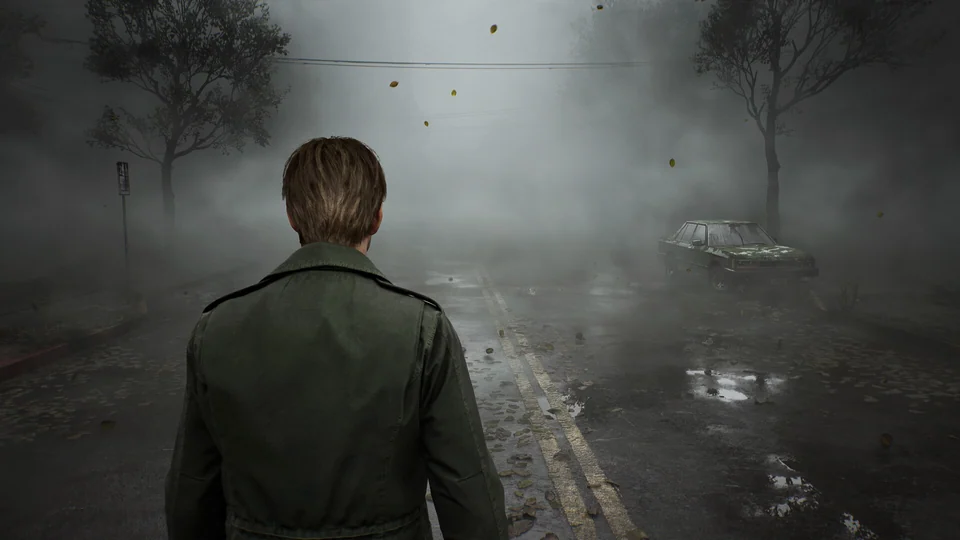
A prominent example is Konami's handling of the Silent Hill and Suikoden properties during the 2010s. Following the disbandment of the internal development collective Team Silent after Silent Hill 4: The Room, Konami outsourced subsequent entries to various Western contract studios. These titles struggled to replicate the psychological depth, surreal audio direction, and Japanese avant-garde horror influences of the original creators. When sales plummeted, Konami pivoted corporate resources away from high-end console software development toward domestic gambling machines and pachinko manufacturing, effectively mothballing their legendary back catalog.
Similarly, F-Zero has remained without a mainline console release since F-Zero GX on Nintendo GameCube in 2003. Nintendo executives repeatedly stated in corporate interviews that they could not envision a sufficiently novel hardware interaction or gameplay gimmick to justify a new release, ignoring player demand for pristine, high-speed anti-gravity racing simulation.
Spiritual Successors: Triumphs and Pitfalls
When corporate entities refuse to revive abandoned intellectual properties, original development leads frequently turn to crowdfunding and independent publishing to create spiritual successors. This dynamic has produced notable triumphs as well as cautionary tales within the industry.
Significant spiritual successors:
- Bloodstained: Ritual of the Night: Led by veteran Castlevania producer Koji Igarashi, successfully delivering modern 2.5D exploration mechanics to players hungry for classic Castlevania: Symphony of the Night gameplay after Konami abandoned the genre.
- Eiyuden Chronicle: Hundred Heroes: Conceived by Suikoden creators Yoshitaka Murayama and Junko Kawano, recreating the 108-character recruitment dynamic and strategic fortress management systems of the classic PlayStation titles.
- Torment: Tides of Numenera: Funded by fans seeking an ideological continuation of Planescape: Torment's philosophical, dialogue-heavy narrative design.
- Armed Fantasia & Penny Blood: Dual kickstarter initiatives launched simultaneously by the original creators of Wild Arms and Shadow Hearts to recover the distinctive turn-based mechanics and gothic-supernatural themes abandoned by Sony and Universal Entertainment.
However, spiritual successors face distinct structural challenges:
- Budget Constraints vs. Inflated Expectations: Crowdfunded budgets rarely match the deep engineering pipelines required for modern game asset production, leading to mechanical friction.
- Loss of Iconic Lore and Trademarks: Creators cannot use their original character names, visual designs, or world settings without facing immediate trademark infringement litigation from corporate rights holders.
- Tone and Design Drifting: Without the editorial checks and collaborative tensions of original studio environments, spiritual successors sometimes struggle to capture the lightning-in-a-bottle appeal of their inspirations.
Community Archaeology & Fan Restoration
In the absence of corporate investment, community developers take on the responsibility of preserving, maintaining, and updating abandoned video game series. Grassroots engineering teams reverse engineer executables to produce widescreen resolution patches, assemble community bug-fixing suites, and create complete fan expansions.
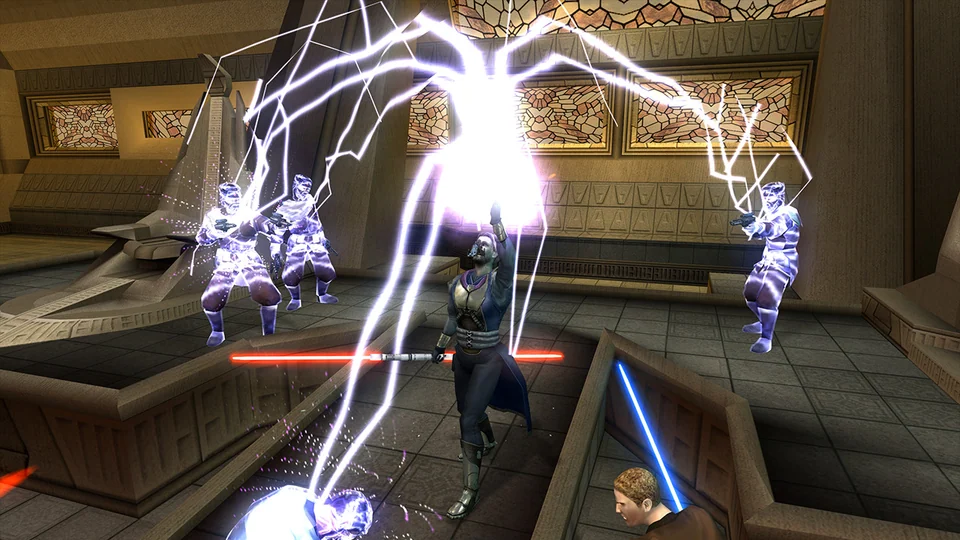
The Tomb Raider community maintained classic Core Design engine titles through custom level editors and source-port projects like OpenLara, providing modern hardware support decades before official remasters were commissioned. In the case of Star Wars: Knights of the Old Republic II - The Sith Lords, the Restored Content Mod (TSLCRM) painstakingly assembled uncompiled audio files, unfinished quest dialogue, and broken combat scripts left behind on retail discs by Obsidian Entertainment due to publisher-mandated holiday release deadlines.
Similarly, the Blood Omen and Soul Reaver communities constructed comprehensive texture upscaling packs, restored cut audio dialogues from beta demo discs, and translated unreleased European builds into unified global preservation packages.
Abandoned franchises demonstrate that while corporate entities can purchase and hold legal title to code repositories, the true cultural life of an interactive artistic work resides within the community of players and independent archivist-engineers who keep its legacy playable.