Digital Wildlife: Living Ecosystems & Animal AI
Table of Contents
- 01 From Static Props to Autonomous Living Beings
- 02 Red Dead Redemption 2: The Benchmark of Ecological Simulation
- 03 Rain World: The Unforgiving Logic of the Food Chain
- 04 Monster Hunter: World and Living Environmental Hierarchies
- 05 Okami: The Sacred Restoration of Nature and Wildlife
- 06 The Hunter: Call of the Wild and Mindful Tracking Realism
- 07 Subnautica: The Oceanic Food Web of Planet 4546B
- 08 Shelter: Maternal Instincts in the Scandinavian Wilderness
- 09 Tokyo Jungle: Urban Wilderness and Darwinian Reclaiming
- 010 The Sacred Mirror of Digital Wildlife
From Static Props to Autonomous Living Beings
For decades, animals in video games were relegated to purely decorative roles or primitive resource containers. They were 2D sprites flickering in forest backgrounds, simple physics destructibles in arcade shooters, or passive livestock that existed merely to drop leather and raw meat when struck with an axe.
The modern era of game engineering transformed digital fauna into dynamic, simulated ecological agents. Advances in processing power, behavioral state machines, and environmental sensory scripting allowed developers to simulate complex biological systems: predator-prey trophic cascades, migratory pathfinding routines, seasonal breeding cycles, and maternal protection instincts.
When animals are simulated with biological authenticity, they transform static game maps into vibrant, breathing ecosystems that exist for their own survival rather than solely for the player's entertainment.
Red Dead Redemption 2: The Benchmark of Ecological Simulation
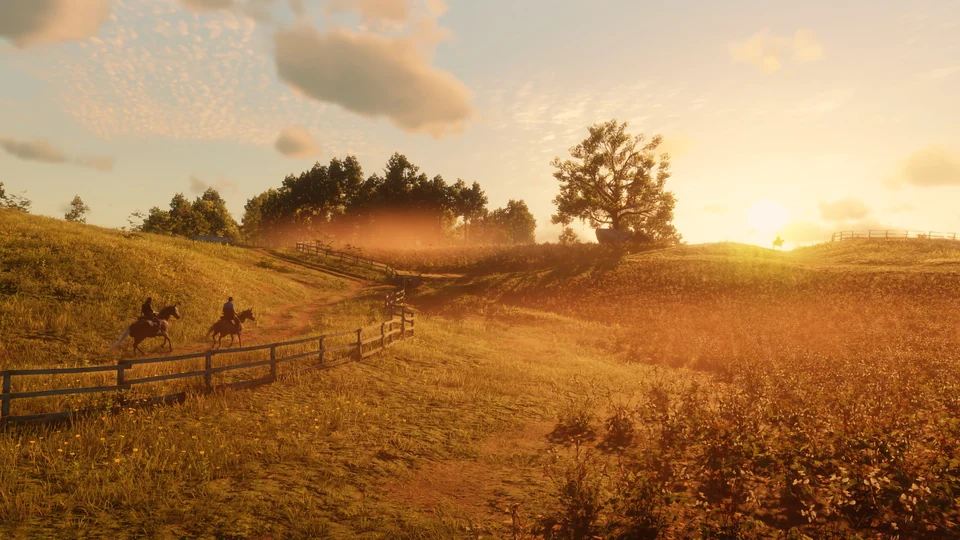
Rockstar Games' Red Dead Redemption 2 (2018) stands as the most staggering achievement in digital wildlife simulation ever published. The game features over 200 distinct animal species, each programmed with bespoke behavioral routines, sensory cones, and biological interdependencies.
Breakthrough ecological mechanics in Red Dead Redemption 2:
- Complete Predator-Prey Food Webs: Predators do not exist merely to attack the player. An eagle will dive out of the sky to snatch a water snake from a riverbank; a grizzly bear will catch salmon leaping through white-water rapids; a wolf pack will stalk and encircle a weakened deer across snowy ridges. Players can observe these interactions through binoculars from hundreds of meters away without ever intervening.
- Scent and Wind Vectors: Animals possess acute olfactory senses modeled along dynamic wind direction vectors. If the player approaches a herd of white-tailed deer downwind, the animals remain calm; approaching upwind triggers instant alarm barks and panicked flight.
- Scavenger Cycles and Decomposition: Slain animals undergo multi-stage physical decomposition over in-game days. Flies gather around carcasses, followed by ravens and vultures descending to pick at the remains, followed by coyotes and foxes arriving at night, until only bleached bones remain.
Rain World: The Unforgiving Logic of the Food Chain
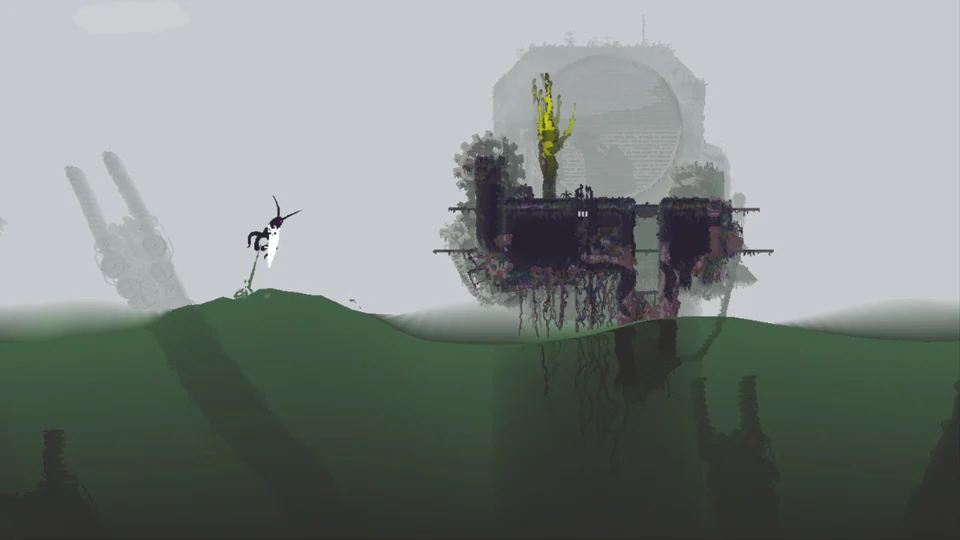
Videocult's Rain World (2017) created one of the most mechanically rigorous, biologically authentic artificial life simulations in gaming history. Players control a small nomadic creature known as a Slugcat navigating a crumbling industrial wasteland battered by lethal periodic monsoon rains.
The autonomous biology of Rain World:
- Non-Player-Centric AI: The creatures of Rain World—lizards, vulture apex predators, miros birds, and kelp monsters—do not spawn in response to the player. They have their own individual dens, caloric hunger thresholds, and hunting routes. The Slugcat is neither special nor heroic; it is simply a small, vulnerable mid-tier link in an ancient, uncaring food chain.
- Procedural Skeletal Animation: Creatures do not use canned keyframe animations. Their limbs, tails, and bodies are simulated using physical inverse kinematics and procedural physics, allowing lizards to clumsily slip on wet pipes or fight over territory with organic, unpredictable physicality.
- Complex Interspecies Dynamics: Lizards of different color variations exhibit rivalries, fighting to establish dominant territory lines. Vultures will abandon hunts if their protective masks are dislodged by spears, retreating to high clouds in humiliation.
Monster Hunter: World and Living Environmental Hierarchies
Capcom's Monster Hunter: World (2018) transformed its iconic monster confrontations by situating them within simulated living biomes such as the Ancient Forest and the Coral Highlands.
Key systemic ecological features:
- Dynamic Turf Wars: Monsters do not exist as isolated arena bosses. When an Anjanath crosses territory paths with a Great Jagras, the game triggers bespoke turf-war grapple animations where physical size, jaw strength, and predatory status dictate real combat damage without player intervention.
- Endemic Life and Foraging Networks: Beyond apex monsters, biomes are populated by hundreds of harmless endemic creatures: glowing vigorwasps, dung beetles rolling balls of soil, and iridescent butterflies that react to footsteps and weather changes.
- Environmental Traps and Flora: Hunters can weaponize the ecosystem itself—triggering flashfly bursts to blind flying wyverns, luring rathalos into collapsing natural dam walls, or eating natural paratoad toxins.
Okami: The Sacred Restoration of Nature and Wildlife
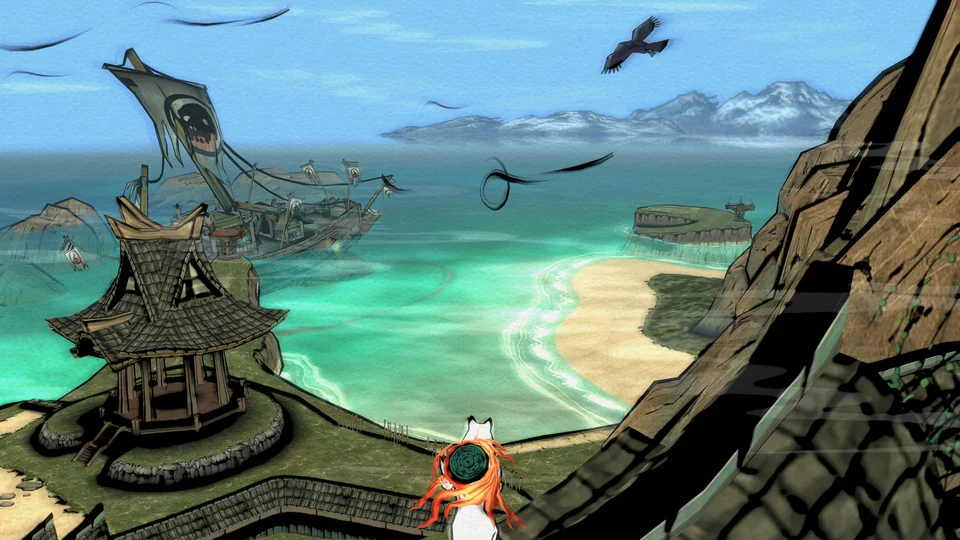
Clover Studio and Capcom's Okami (2006), directed by Hideki Kamiya, placed the relationship between divinity and the animal kingdom at the center of its sumi-e watercolor tapestry.
Ecological restoration mechanics in Okami:
- Feeding the Wild Fauna: Throughout Nippon, playing as the white wolf goddess Amaterasu, players carry bags of grain, meat, and fish to feed frightened woodland animals: sparrow families, wild boar litters, hares, and sacred deer. Kneeling beside the animals while they eat prompts joyful clover blooms that award Praise experience points.
- Revitalizing Dead Biomes: The Celestial Brush allows players to paint life back into corrupted cursed zones. Blooming cherry blossoms, purifying stagnant waterways, and drawing sunshine into gloomy valleys instantly restores wildlife populations, framing nature preservation as the ultimate spiritual triumph.
The Hunter: Call of the Wild and Mindful Tracking Realism
Expansive Worlds' The Hunter: Call of the Wild takes animal simulation into surgical acoustic and spatial ballistics territory.
Biological simulation disciplines:
- Acoustic Auditory Footprints: Animals calculate flight reactions based on substrate materials: dried leaves crunch louder than damp moss, and heavy backpacks generate metallic clinks that spook red deer across hundreds of yards.
- True-To-Life Spoor Tracking: Blood trails, trampled vegetation, droppings temperature, and mating calls require players to act as real wildlife naturalists, reading environmental clues rather than following glowing mini-map icons.
- Ethical Harvest Scoring: The game explicitly penalizes unethical shooting angles, rewarding clean, single-shot vital organ hits that respect animal anatomy.
Subnautica: The Oceanic Food Web of Planet 4546B
Unknown Worlds Entertainment engineered an interconnected aquatic hierarchy in Subnautica that mirrors real-world marine biology.
Ecological mechanics in the depths:
- Plankton to Apex Predators: Tiny Peeper and Boomerang fish school near coral heads feeding on phytoplankton; mid-tier Stalkers and Sand Sharks hunt these schools using territorial patrol loops; colossal Reaper and Ghost Leviathans rule the open pelagic zones.
- Behavioral Lures and Deterrents: Rather than killing apex predators, experienced players learn ecological deterrence: releasing small prey fish to distract aggressive stalkers, utilizing acoustic decoys, or deploying perimeter electrical shields, respecting the creature's rightful place at the top of the food web.
Shelter: Maternal Instincts in the Scandinavian Wilderness
Might and Delight's Shelter (2013) explored digital fauna through the intimate emotional lens of maternal care. Players step into the paws of a mother badger guiding her litter of five cubs through the dangers of the Scandinavian wilderness.
Emotional and biological design in Shelter:
- Vulnerability and Protection: The mother badger must continuously forage for earthworms, catch frogs, and dig for roots to feed her rapidly hungry cubs. The threat of circling birds of prey, night-time river crossings, and sudden forest fires creates intense protective tension.
- Permanent Loss Without Melodrama: If a cub falls behind and is seized by a hawk in the shadows, there is no game-over screen. The tragedy is quiet and permanent; the remaining litter presses forward through the tall grass, capturing the stark, unsentimental reality of nature.
- Papercraft Aesthetic: The game's unique storybook texturing and gentle folk soundtrack emphasize the fragile, sacred beauty of maternal devotion in the animal kingdom.
Tokyo Jungle: Urban Wilderness and Darwinian Reclaiming
Crispy's and Sony Computer Entertainment's Tokyo Jungle (2012) presented one of the most eccentric yet biologically rigorous portrayals of urban wildlife reclamation on PlayStation 3. Set in a depopulated modern Tokyo where humanity has vanished, domestic pets and zoo escapees fight for survival across Shibuya crossing and Roppongi hills.
Core systemic animal simulations in Tokyo Jungle:
- The Herbivore and Carnivore Dichotomy: Playing as a tiny Pomeranian dog or a massive African elephant demands completely divergent behavioral mindsets. Herbivores focus on stealth grazing, scent marking, and escaping through drainage grates, while predators must manage hunger timers, coordinate pack stalking, and execute lethal neck bites on larger prey.
- Generational Succession and Genetic Drift: To avoid succumbing to starvation or toxic smog events, animals must establish territory rings, locate suitable mates based on social ranking, and produce offspring. Each successive generation inherits enhanced stat multipliers and hunting instincts, turning urban survival into a fast-paced generational lineage experiment.
- Ecological Niche Inversion: Domestic lap dogs evolve into ferocious alpha predators while escaped zoo hyenas establish hunting packs among neon-lit subway platforms, illustrating how quickly nature reclaims artificial concrete environments.
The Sacred Mirror of Digital Wildlife
When video games accurately simulate animals and living ecosystems, they offer human players a vital psychological mirror. In an increasingly urbanized and ecologically fragile world, experiencing the autonomous beauty of a deer herd in the morning mist, the raw struggle of a mother badger, or the complex food chain of a rain-soaked wasteland reminds us that humanity is not separate from the natural world, but an interconnected participant within it.