
Defunct Online Worlds: Shuttered MMOs & Digital Archaeology
Table of Contents
The Architecture of Fleeting Digital Societies
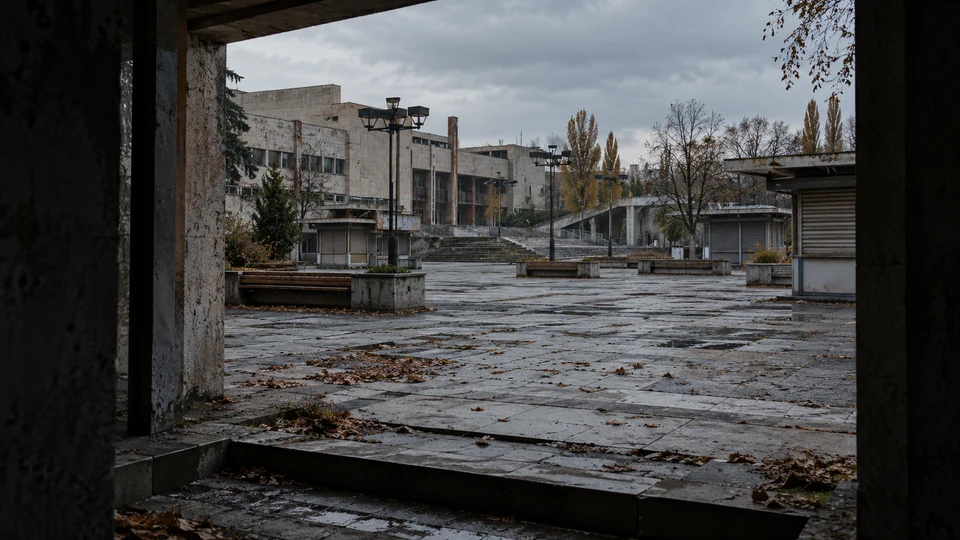
Massively multiplayer online role-playing games and persistent virtual worlds represented an unprecedented sociological milestone in computing history. Unlike standalone software that remains static within local storage, a persistent online world exists as a dynamic ecosystem defined by player interaction, server-side economy simulation, and distributed social structures. Cities like Britain in Ultima Online, Coronet in Star Wars Galaxies, and Atlas Park in City of Heroes operated as real municipal hubs with distinct territorial cultures, market nodes, and political factions.
The structural longevity of these spaces is entirely contingent upon continuous telecommunication infrastructure. Every player character, item exchange, territorial deed, and guild registry exists solely as indexed rows within relational databases hosted on dedicated enterprise clusters. The moment a publisher issues a shutdown order, this living social fabric ceases to function. The digital architecture remains embedded within client installation discs, but without the central server simulation engine to process world state loops, the client remains an inert shell unable to cross the login barrier.
The extinction of an online world triggers a profound cultural loss. Virtual worlds foster collaborative problem-solving, real-money micro-economies, emergent artistic communities, and cross-cultural communication networks. When the final socket connection drops, years of player architectural contributions, community events, and shared digital folklore dissolve into network silence.
Economic Collapse and the Anatomy of Server Shutdowns
The commercial lifespan of persistent online worlds is dictated by operational expenditure versus recurring subscriber revenues. Beyond standard software maintenance, persistent simulations require continuous server blade cluster hosting, distributed content delivery networks, automated database replication, persistent database administrators, network security monitoring against distributed denial-of-service incursions, and continuous customer support teams. When monthly active subscriber counts decline below the operational break-even threshold, corporate boardrooms inevitably initiate decommissioning timelines.
Several historical factors trigger terminal economic decline in virtual worlds:
- Technology Shifting and Graphic Obsolescence: Older game engines built on proprietary DirectX 8 or 9 architectures struggle to scale to multi-core processing threads, high-refresh displays, and modern operating system memory management architectures.
- Radical Game Redesigns Alienating Core Communities: Sony Online Entertainment's infamous 2005 New Game Enhancements update to Star Wars Galaxies overhauled core skill trees and profession mechanics overnight, resulting in an immediate mass exodus of veteran players and irrecoverable revenue contraction.
- Market Saturation and Business Model Friction: The emergence of free-to-play mobile ecosystems and session-based multiplayer titles disrupted traditional subscription-based financial models, leaving subscription-reliant MMOs economically stranded.
Chronology of notable virtual world terminations:
- The Matrix Online (2005-2009): Operated by Monolith and later Sony Online Entertainment, concluding with an apocalyptic digital event that abruptly terminated connection sockets.
- Star Wars Galaxies (2003-2011): Decommissioned to reallocate intellectual property licensing exclusivity to BioWare's Star Wars: The Old Republic.
- City of Heroes (2004-2012): Abruptly shuttered by NCSoft despite profitable subscription performance, inspiring years of underground reverse engineering efforts.
- WildStar (2014-2018): Carbine Studios' ambitious sci-fi MMO suffered from punishing endgame barrier designs and closed following persistent population attrition.
- Asheron's Call 1 & 2 (1999-2017): Shuttered simultaneously by Turbine and Warner Bros. after seventeen continuous years of live operation, permanently closing Dereth to thousands of loyal players.
The Final Hours: The Ritual of Digital Closure

The final hours of a dying virtual world exhibit consistent, poignant sociological phenomena across diverse communities. When publishers publish formal shutdown dates, players who had abandoned the game years prior return to install legacy software clients. Communities organize massive wake ceremonies, memorial marches through iconic zones, and chaotic combat rallies where game administrators spawn raid bosses in central pedestrian plazas.
In the final minutes of Star Wars Galaxies in December 2011, thousands of players congregated in Mos Eisley and Coronet. Imperial and Rebel combatants ceased open-world hostilities, standing side by side in planetary squares as in-game day-night cycles faded into black screens. In Tabula Rasa, Richard Garriott's team triggered a scripted global alien invasion where Earth defense forces staged desperate last stands before database connections severed.
The technical mechanics of the final shutdown follow a rigid sequence:
- Administrative Global Broadcasts: Server engineers transmit terminal system warning messages alerting all connected clients to impending disconnection intervals.
- Packet Stream Throttling: Zone servers cease accepting new spatial coordinate inputs and player command packets.
- Database Flushing: Transaction managers commit final world state saves to local non-volatile storage before terminating database instances.
- Connection Reset: Network load balancers send TCP RST packets to all active client sockets, returning players instantly to desktop operating system interfaces.
- Infrastructure Deprovisioning: Virtual private clouds, virtual machines, and colocation rack spaces are wiped and repurposed, permanently purging unique server states and player inventories.
Resurrection Protocols: Packet Analysis and Server Emulation
The permanent disappearance of online worlds inspired a dedicated sub-discipline of software engineering: server emulation. When a game client survives in the wild, skilled community engineers can theoretically reconstruct the missing server backend from scratch. Because commercial server code is rarely leaked or released publicly, emulators must be developed using black-box reverse engineering methodologies.
The technical pipeline for community server resurrection encompasses:
- Packet Sniffing and Protocol Documentation: While a game remains live, archivists utilize network diagnostic tools such as Wireshark to intercept and log millions of raw TCP and UDP packet exchanges between client and server. These packet captures, known as PCAPs, form the genetic blueprint of the communication architecture.
- Cryptographic Protocol Analysis: Reverse engineers decompile client executables using tools like Ghidra and IDA Pro to identify session key generation routines, packet encryption ciphers, and serialization headers.
- Server State Engine Rebuilding: Developers code standalone open-source server applications (frequently in C++, Rust, or Java) designed to accept standard client connections, simulate spatial physics, calculate combat formulas, and persist world states across relational SQL databases.
- Database Schema Reconstruction: Analysts examine client asset archives to map out thousands of item identities, non-player character spawn coordinates, quest logic trees, dialogue scripts, and spatial patrol paths.
Prominent success stories in persistent world emulation include:
- SWG Legends & SWGEmu: Massive community-engineered server architectures that recreate both pre-CU and NGE eras of Star Wars Galaxies, hosting thousands of active concurrent participants across dedicated high-performance blades.
- Homecoming (City of Heroes): Following years of secret private server operations, the Homecoming collective received an official, historic development license from publisher NCSoft in 2024 to operate legal, non-profit community servers.
- Project 1999: An authoritative reverse-engineered restoration of classic EverQuest, meticulously preserving game balance mechanics up to the Scars of Velious expansion.
- Return of Reckoning: A vibrant community resurrection of Warhammer Online: Age of Reckoning, continuously balancing competitive Realm vs. Realm combat ten years after official servers went dark.
The Cultural Imperative for Multiplayer Preservation
Virtual worlds represent complex social experiments and collaborative architectural triumphs that deserve the same archival protections afforded to cinema, literature, and architectural monuments. When an MMO vanishes completely, humanity loses not only a commercial entertainment software suite, but also the recorded history of social communities that lived, communicated, and collaborated within its synthetic borders.
Archival organizations like the Video Game History Foundation continue to lobby government bodies and international copyright regulators for legal exemptions that would permit non-profit institutions to run preservation server stubs for educational and historical study. Until such legal protections are firmly codified, the continuity of multiplayer gaming history relies entirely on decentralized reverse engineers, network packet archivists, and passionate community custodians working against the clock.
Preserving an online game is inherently different from archiving a book or a film. A film remains intact as long as its physical celluloid or digital bitstream survives. An online game requires an active computing ecosystem: client code, network transport protocols, server physics loops, and real human participants interacting within simulated shared spaces. Without these interlocking components, the medium's most socially profound accomplishments remain inaccessible to future scholars and players.